

Price and value
One of the most considered parameters in estimating the value of a rhodochrosite gem, as with all colored stones, is the color, which is then assessed along with the weight and measurements of the mineral when it is still in its raw state and the transparency, providing an initial price evaluation.
The cut is another element to take into account.
The rarest and thus highly sought-after rhodochrosite stones by collectors and jewelers worldwide are those in crystals almost entirely free of inclusions and characterized by saturated and bright colors tending towards red. Their prices are influenced by the limited availability of raw material suitable for processing.
Its uniqueness attracts enthusiasts from every corner of the world.
Jewelry and sculptures in rhodochrosite
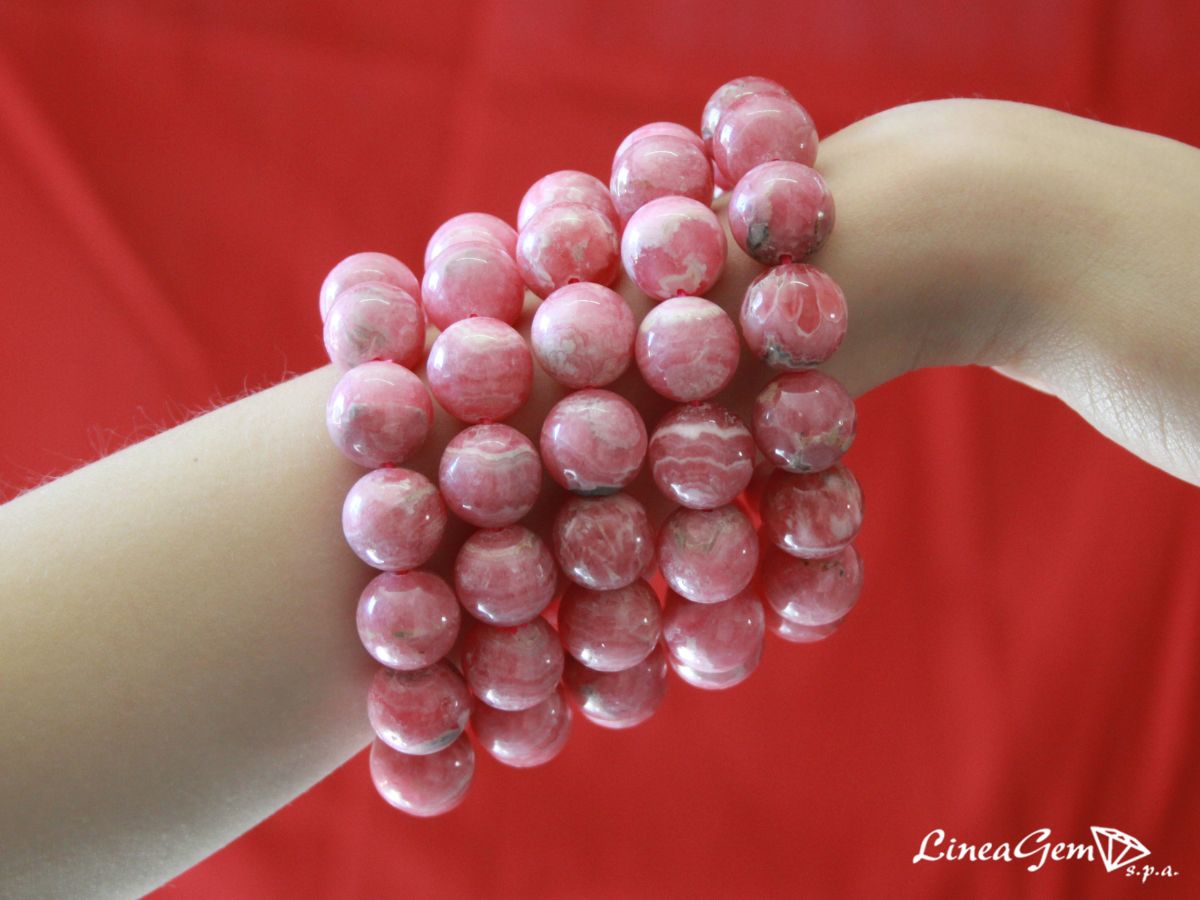
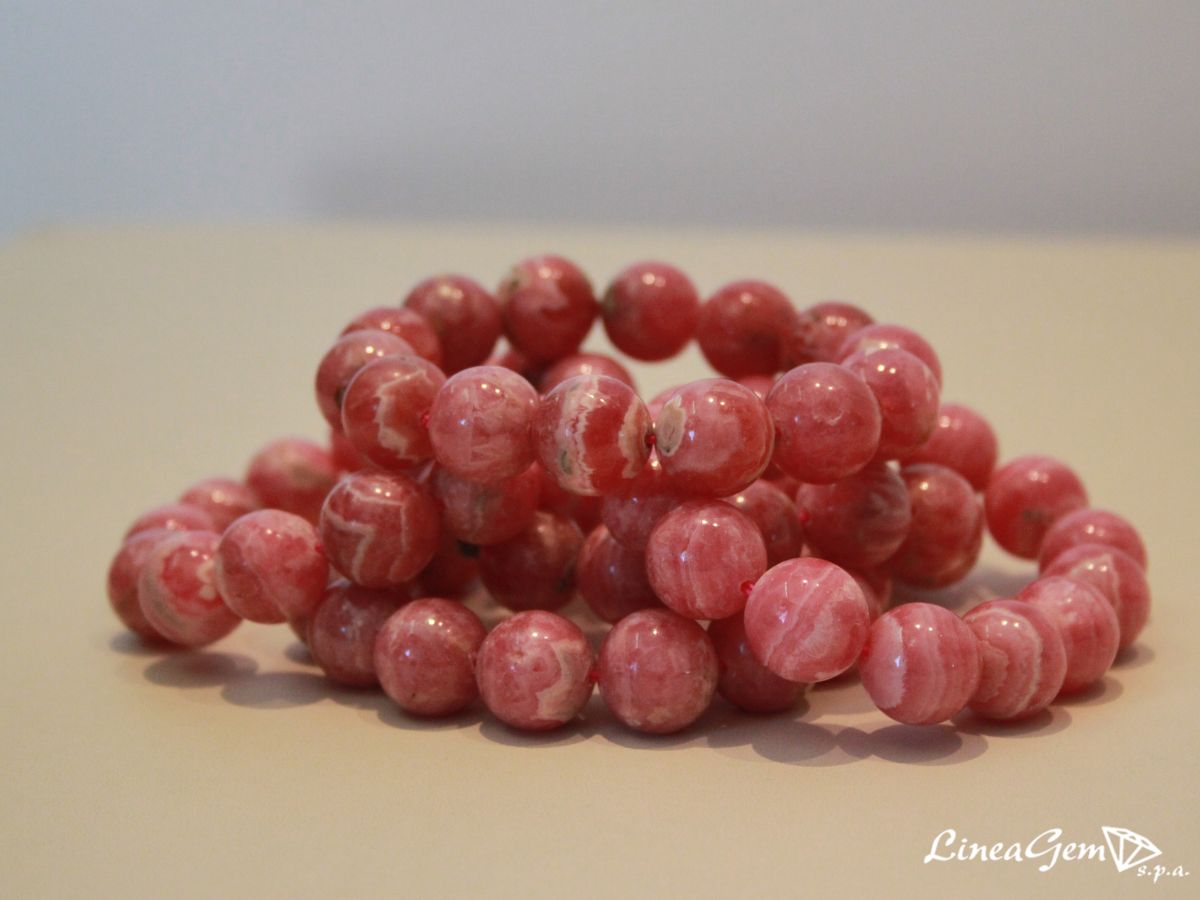
This gem is chosen and selected for creating romantic-style jewelry. It can be found as a highlight in prestigious rings or pendants paired with other precious stones or set in elegant bracelets. In our online catalog, you can also purchase rhodochrosite jewels, rhodochrosite natural gemstones or strands made up by rhodochrosite to use as a starting point for DIY jewelry creations.
You can also browse our website to find unique rough pieces, collectible gems, sculptures, or carvings in rhodochrosite to use as ornaments or design objects.
Cleaning and caring for rhodochrosite jewelry
Rhodochrosite is a gem that requires certain care so you can enjoy it with peace of mind forever.
Since it is a fragile gem, it's essential to ensure it doesn't suffer strong impacts that could compromise its integrity, and it is therefore advisable to remove rhodochrosite jewelry before doing any household chores.
As it is a carbonate, it is crucial to avoid letting the rhodochrosite gem come into contact with chemical products such as perfumes, creams, and other cosmetics.
Periodically but in a limited manner, it is recommended to take care of it by performing a surface cleaning by rinsing rhodochrosite jewelry under distilled water and then letting them air dry without rubbing with any cloth.
Curiosity and origin of rhodochrosite
The term rhodochrosite was coined in the 1800s by the Greeks, who with "rhodokhros," a compound of "rhodon" meaning rose and "chrosis" or "chros" meaning color, referred to a spectacular "stone of the color of roses."
It has a very interesting history dating back thousands of years. Ancient civilizations such as the Aztecs, the Inca, and the Maya attributed great value to this stone, considering it sacred. They believed rhodochrosite to be the blood of the gods and used it for ceremonial and decorative purposes.
The major extraction sites for rhodochrosite are found in South America, with the most famous site that offers spectacular specimens being in Argentina, where the Capillitas mine is known for producing some of the world's most beautiful rhodochrosite. Other sites are in Africa, in the Kalahari region, Romania, and the United States. It is the national stone of Argentina and the official state mineral of Colorado.
Rhodochrosite began to be considered as an ornamental gemstone only shortly before the start of World War II.
Rhodochrosite is appreciated worldwide for its beauty and its symbolic meaning. It is believed that this stone stimulates empathy, love, and harmony in relationships and is often associated with emotional well-being; for this reason, the world of crystal therapy takes it into particular consideration and considers it a gemstone for lithotherapy.
Blog categories
Last blog articles
 Copal: everything you need to know about this precious resin and its uses
 Citrine quartz: here are all the characteristics of the precious gemstone with the sun inside
 Aquamarine: characteristics, origins, curiosities, and prices of a fantastic gemstone.
 The Garnet: All the Characteristics of the Natural Gemstone with Multiple Varieties
 Dendritic lithographic limestone: a journey into the heart of a fascinating sedimentary rock