The color of aquamarine
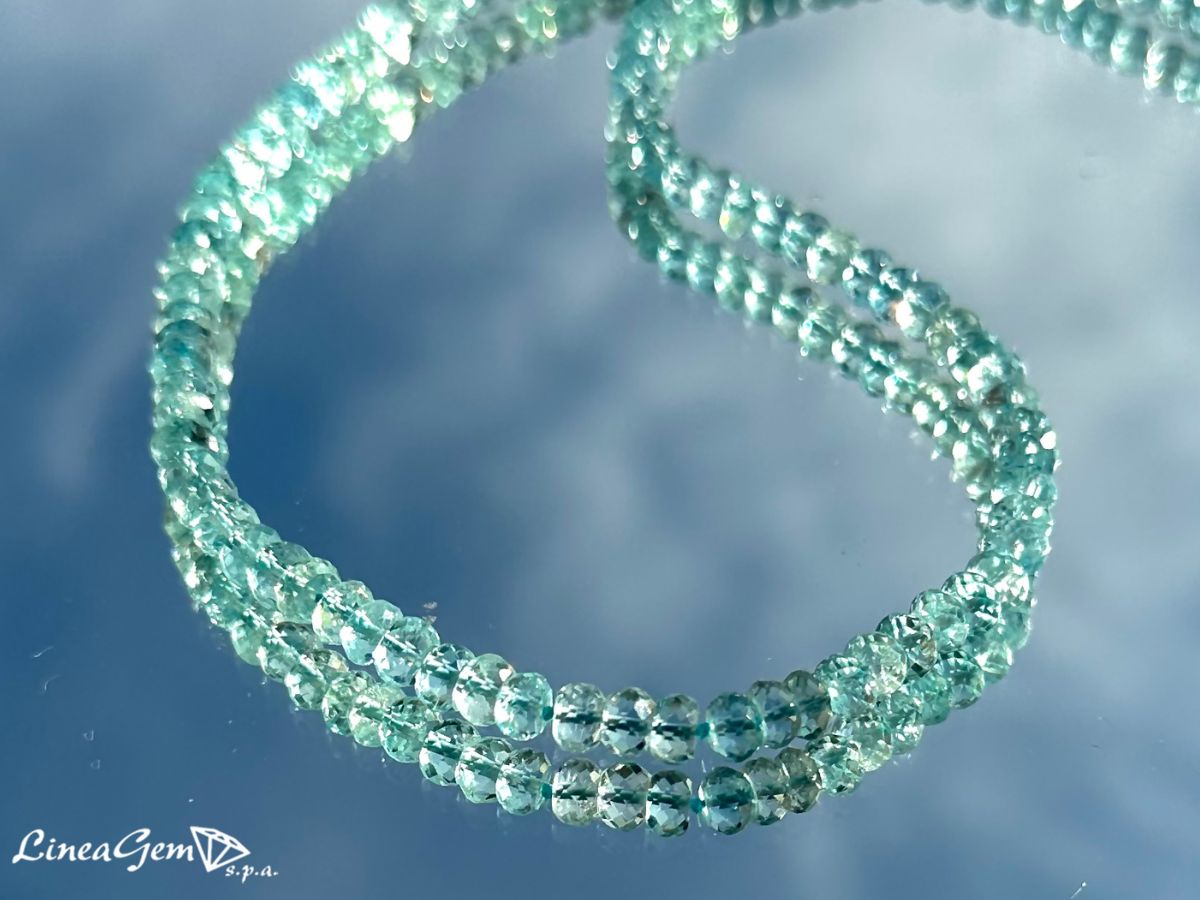
The typical color of aquamarine is a clear blue, which can vary in intensity, sometimes with shades tending towards green, up to being a very intense blue in the quality known as Santa Maria aquamarine. The blue color is due to the presence of iron in the crystal lattice, which albeit in minimal amounts and with different degrees of oxidation, precisely in the two states of ferric and ferrous oxidation, is the chromophore element. When present in large quantities, aquamarine is indeed of a very saturated blue.
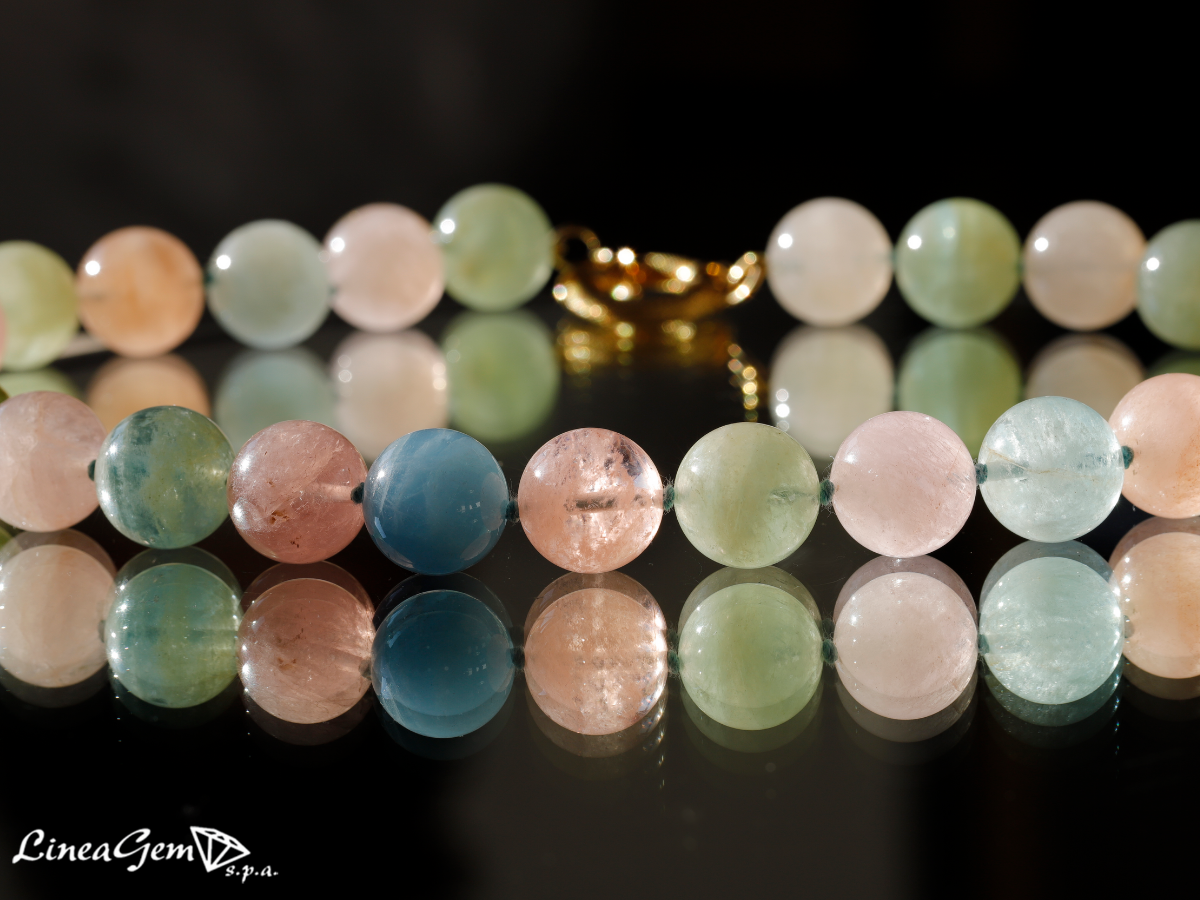
Usually, the most valuable stones are transparent, but there are some specimens with inclusions, which make the stones translucent and milky, called "milky", and sometimes they even exhibit the phenomenon of asterism!There are stones like aquamarine, always belonging to the beryl family, that come in other colors. An example is morganite with its light pink color, found in some geographical areas; or heliodor, with its golden yellow color.
The cut of aquamarine
Aquamarine is often found in the form of raw crystals of considerable size, which allow for the extraction and processing of gems in various shapes and cuts. It is not rare to find aquamarine stones for setting with both faceted and cabochon cuts, or gems that are drilled and cut spherical, in rondelle, and in freeform shapes, highly appreciated and used for various artisanal jewelry work.
Jewelry in aquamarine
Aquamarine can be considered a perfect precious stone for the creation of many types of jewelry. Thanks to its hardness and luster, it is possible to create necklaces, bracelets, earrings, rings, and pendants. Like all gems, however, it requires due care, and only in the hands of expert goldsmiths, capable of handling precious stones with care, can artisanal setting masterpieces be created.
Among the many natural stones, aquamarine is definitely one of the best gems to choose for jewelry making, both in terms of beauty and versatility. In our catalog, we offer various strands of aquamarine gems for DIY enthusiasts who wish to design and customize their own jewelry, along with a section that includes all the tools necessary for crafting. If you prefer ready-made jewelry, our catalog offers a wide selection of necklaces, bracelets, and rings with 100% natural aquamarine stones.
The price of aquamarine
When discussing the "price of aquamarine," as with any other gemstone, there are specific guidelines useful for estimating its value. What must be taken into consideration are the combination of various factors that determine the price of a stone: weight, size, color, transparency, and rarity. Weight, measured in carats, plays an important but not decisive role in estimating the value of natural stones like aquamarine.
When evaluating one aquamarine gem against another, all the different factors need to be compared. For example, a 10-carat aquamarine gem theoretically has a higher value than a 5-carat one. However, if the latter has higher transparency and a more saturated color than the former, its final value could be higher.
Care for Aquamarine
Despite being a fairly resistant and hard gemstone, aquamarine, like all gems, requires simple but essential care to preserve its integrity over time.
We recommend cleaning your aquamarine jewelry with warm water and mild soap, to be gently rubbed and, if necessary, brushed with a soft brush in less accessible areas such as the claws of the setting. Avoid wearing aquamarine jewelry, such as rings, during manual work. Even a minimal but well-placed impact could chip your stones.
Origin of natural aquamarine
The main deposits of aquamarine are found in Brazil, in the state of Minas Gerais. In these areas, stones with light colors can be found, and it is here that the Santa Maria variety was discovered. Others are found in Russia, which offers beryls of all colors, or in Madagascar where the most precious specimens are extracted, currently the main source of Santa Maria Aquamarine. This stone can also be found in Afghanistan, Nigeria, Pakistan, California, South Africa, Sri Lanka, Mozambique, India, Australia, and China.
Interesting Facts about Aquamarine
It's interesting to know that some specimens of aquamarine are also found in Italy! In the area of the Central Alps, in Lombardy, in the lower Valtellina, blue crystals are found inside cavities, called "pockets," in pegmatitic rocks where, in addition to beryls, garnets, tourmalines, and micas can also be found.
In Tuscany, in the pegmatites of Monte Capanne located on the island of Elba, crystals of white or light blue color can be found, generally clear and small in size. In this locality, beautiful morganites have also been found.
In the field of
crystal therapy, aquamarine is considered a stone of particular importance, capable of alleviating some problems thanks to its properties.


 Copal: everything you need to know about this precious resin and its uses
 Citrine quartz: here are all the characteristics of the precious gemstone with the sun inside
 Aquamarine: characteristics, origins, curiosities, and prices of a fantastic gemstone.
 The Garnet: All the Characteristics of the Natural Gemstone with Multiple Varieties
 Dendritic lithographic limestone: a journey into the heart of a fascinating sedimentary rock